Fatherhood therapy · Florida & Pennsylvania
Becoming a dad changes more than your schedule.
You love your child. You’re trying to show up. And somewhere between the sleepless nights, work, and figuring out your role, you may be wondering what happened to you. Those things can all be true at once.
Online therapy for expectant, new, and experienced dads in Florida and Pennsylvania. Support for preparation, identity, relationships, work pressure, and the feelings fatherhood brings to the surface.
Request a free 15-minute consultation →A 15-minute conversation with Andrew Richey, LCSW.
Finding your footing
Support for the transition to fatherhood
You can feel proud, scared, connected, and completely overwhelmed in the same day. Bonding may be immediate or take time. Here, you can say what’s actually happening without worrying that it makes you a bad dad.
01 / PREPARATION
What is my role here?
Preparing emotionally, finding confidence in the early months, sharing care, and sorting out what being a present dad means to you. You do not need to have a ready-made model to begin.
02 / IDENTITY & WORK
Where do I fit now?
Balancing providing with being present. Making room for ambition, friendship, rest, and your own identity while the demands on you grow. Exploring the pressure to keep everything together.
03 / RELATIONSHIPS
How do we find each other?
Changes in intimacy, communication, resentment, and the division of responsibility. Learning to name what you need and listen to each other as partners and co-parents.
The history you bring with you
Sometimes becoming a father brings your own father into sharper focus.
The love you feel for your child can open a door to feelings you thought you had already put away.
Appreciation. Longing. A different understanding.
You may see your father's care with new appreciation, understand parts of his experience differently, or wish he were here to share this chapter. Even a joyful beginning can carry grief for someone you miss.
Old hurt, seen through new eyes.
If your father was absent, distant, or did not make you a priority, loving your own child may make that harder to understand: How could he have chosen differently? Hurt, anger, and grief may surface alongside your determination to be present.
We can explore what you received, what you needed, and what you want to carry forward. You do not have to excuse what happened, force forgiveness, or reconnect to work toward the fatherhood you want.
A person behind the practice
A father, too.
I’m Andrew Richey, a Licensed Clinical Social Worker, husband, and father of three. When I talk about the identity shifts of family life and trying to keep your head above water, I’m speaking from the trenches, too.
I won’t assume my experience is yours. I do know that loving your family doesn’t make exhaustion, resentment, or uncertainty disappear. We can talk about all of it.
My work in grief, trauma, couples therapy, and healthcare leadership helps me connect the pieces: your history, your relationship, the pressure to provide, and the father you want to be. You get to be a person here, too.
More about Andrew →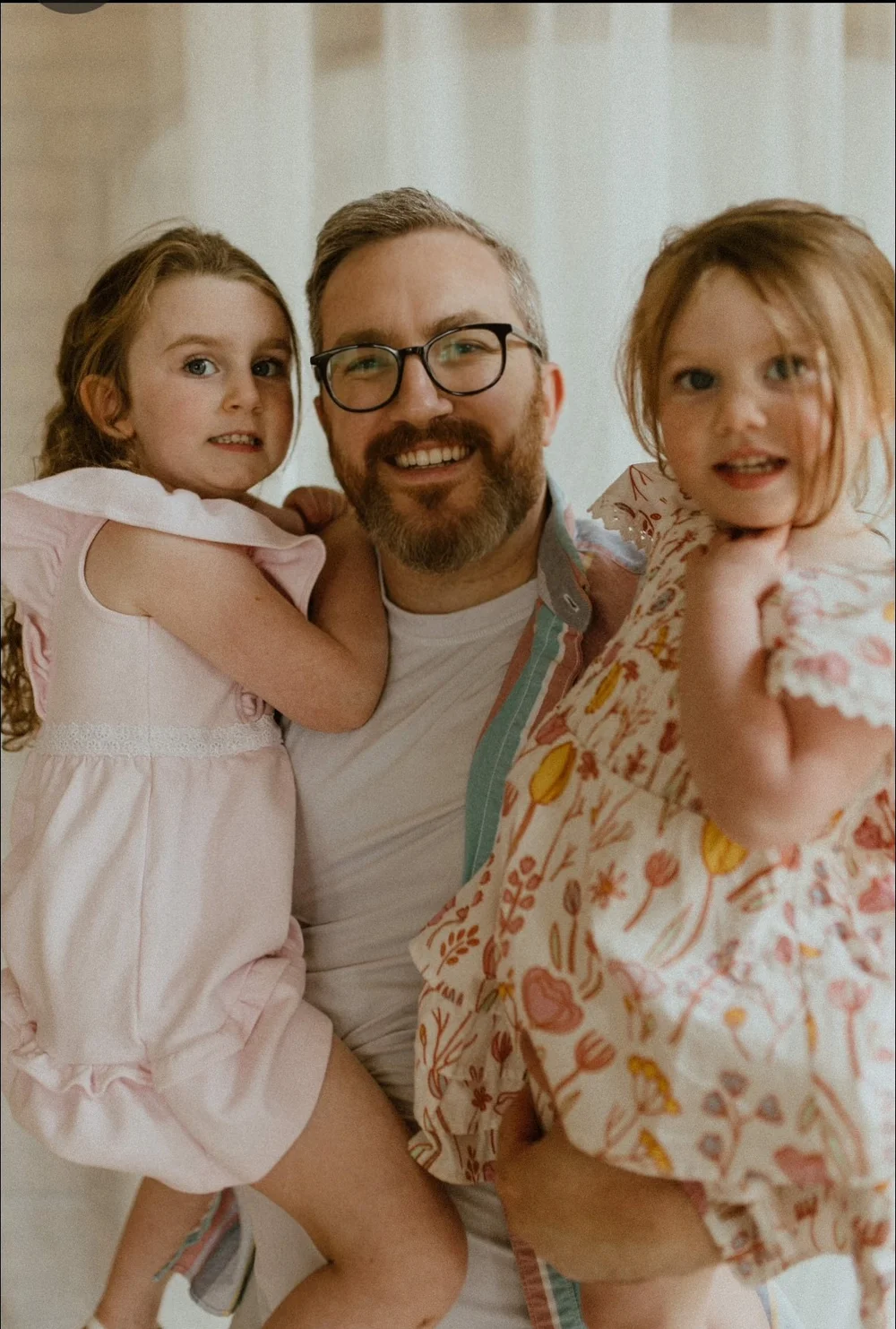
Grief & loss
When fatherhood includes loss.
Pregnancy loss, the death of a child, or losing your own father can change how this chapter feels. You may be supporting others while wondering where your grief belongs.
There is space for your relationship, your loss, and your experience as a father. We will not rush you toward closure or ask you to put a positive spin on what hurts.
How we work
Thoughtful conversations. Practical steps.
We look at what happens when you’re stretched thin: snapping, shutting down, working more, or telling yourself you should be handling it better. Then we practice other ways to respond, ask for help, and share the load. CBT and ACT help connect those changes with the kind of father and partner you want to be.
Trauma-informed care keeps your history and sense of safety in view. Relationship work draws on Gottman-informed approaches to communication and connection. Together, we decide what is useful for your situation.
If the strain between you and your partner needs attention together, couples therapy is another option.
Explore my approach →Questions you may be asking
You do not have to wait until things fall apart.
Can I start therapy before my child arrives?
Yes. We can work on expectations, fears, identity, communication, and the kind of father and partner you want to be before this new chapter begins.
What if I love my child but miss parts of my old life?
Both can be true. We can talk honestly about changes in freedom, connection, work, and identity without treating those feelings as evidence that you care less about your child.
Is this only for first-time dads?
No. We can work together through later transitions, growing families, co-parenting, stepfatherhood, adoption, and changes in your relationship with your children. Fatherhood takes many forms; we start with yours.
Can we talk about my own father or feelings I did not expect?
Yes. That can include appreciation, missing him, anger, disappointment, or grief for the relationship you needed. We can explore these feelings without assuming what your relationship should become.
How do appointments and payment work?
I provide online individual therapy for clients located in Florida and Pennsylvania. Private-pay sessions are $140. Insurance may be available through Headway, depending on your plan and current availability. Request a consultation so we can discuss fit and next steps.
Make room for yourself, too
You can be there for your family
and have support of your own.
You don’t need to wait for a crisis or know exactly what to say. Start with the part of this that’s harder than you expected.
Request a free 15-minute consultation →